
India's Supply Chains in a World at War: Trade, Power, Conflict, and Entanglement among Empires in the New Global Order
₹720.00

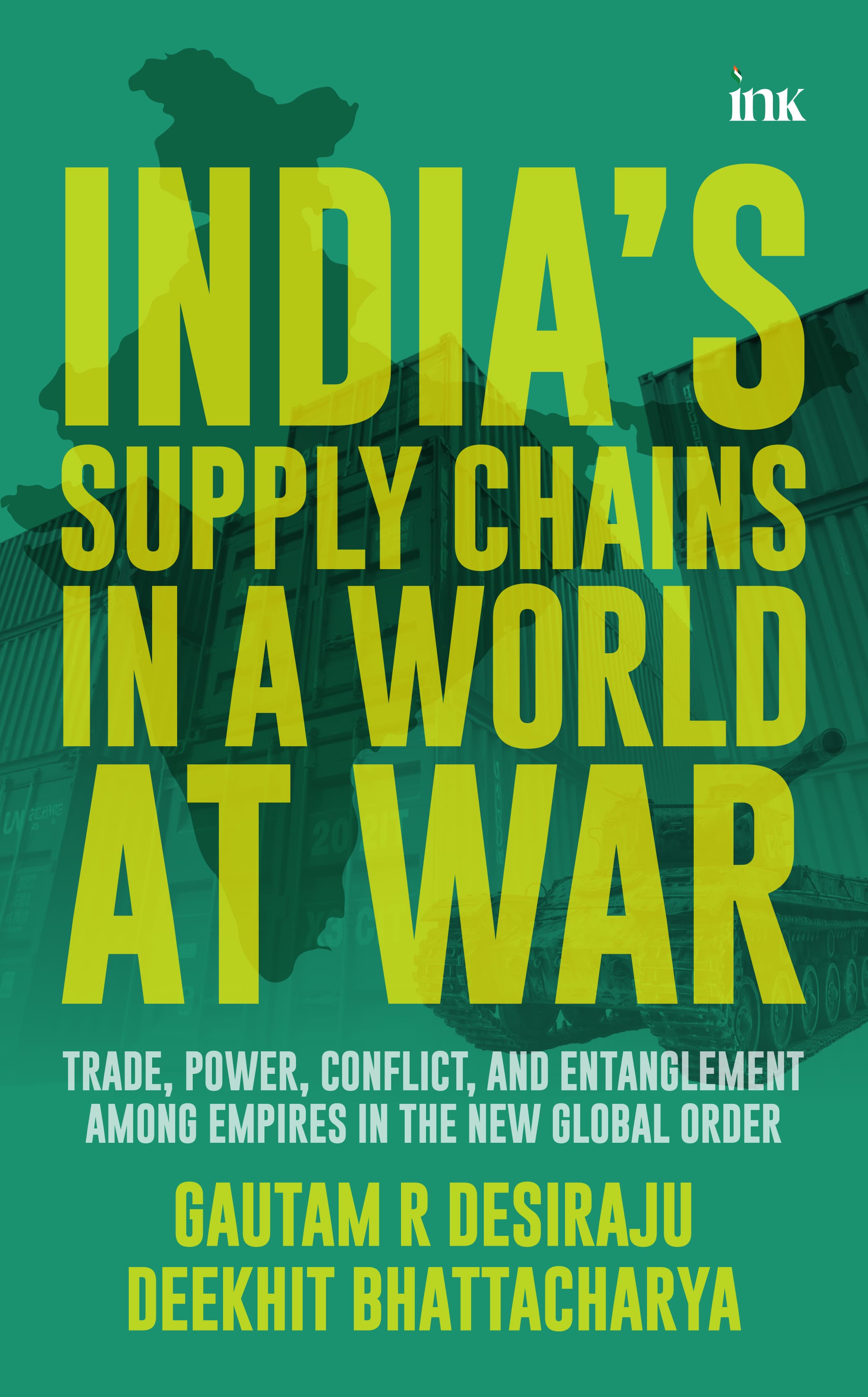
India's Supply Chains in a World at War: Trade, Power, Conflict, and Entanglement among Empires in the New Global Order
₹720.00
Specifications
- Language:ENGLISH
- Format: PAPERBACK
- Pages: 552 pages
- ISBN-13: 9789365479904
- Item Weight:
- Dimensions: 216x140
- Genre: Business and Economics
Description
India's Supply Chains in a World at War goes far beyond conventional discussions of trade and logistics to examine how conflict, economics, and civilizational strategy shape the global stage.
Supply chains are often viewed simply as pipelines for goods—but in today’s&

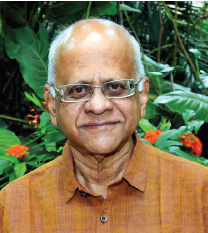

Gautam R. Desiraju
Gautam Desiraju is one of India’s foremost scientists, with an h-index of 104 and seminal contributions to the fields of crystal engineering and hydrogen bonding. He is Professor Emeritus at the Indian Institute of Science, Bengaluru, and Distinguished Professor at UPES, Dehradun. Desiraju served as the President of the International Union of Crystallography from 2011 to 2014. He is a recipient of several prestigious international awards, including the Humboldt Research Award and the van der Waals Prize. He is also the author of Bhārat: India 2.0, a book that advocates for constitutional refor

‘As geopolitics and trade have become entwined, Gautam Desiraju reveals how India’s supply chains have become instruments of strategy and sovereignty. From semiconductors to defense, he explores how India is reshaping global value chains amid rising tensions and shifting alliances. Bold, timely, and deeply analytical, this book challenges business leaders to view supply chains not just as operational backbones but also as levers of national power. I am excited to apply these perspectives in my business research narratives, and for executives, policymakers, and strategists alike, India’s Supply Chains in a World at War offers a compelling vision of resilience and leadership in the new era of global competition.’
Jeff Kavanaugh
chief learner and sharer, Infosys Knowledge Institute
‘India’s Supply Chains in a World at War is a brilliant and timely exploration of how trade, power, and conflict are reshaping the global order, with supply chains becoming the new terrain of global competition. Desiraju and Bhattacharya expose what many refuse to confront—power flows through the arteries of supply. In every boardroom I enter, the question is no longer about cost; it is about control. This book brings clarity to our complex world and challenges us to think beyond efficiency to sovereignty, resilience, and purpose. India’s rise depends on mastering the complexity of global networks while protecting its national interests. This book, essential reading for policymakers and executives, offers both a warning and a roadmap.’
Sheri Hinish
‘Supply Chain Queen’; global executive in sustainability, AI, and supply chain innovation; board and trusted C-suite advisor
‘Globalization has created a world where supply chains can become weapons of war. Even as the book was being written and published, this possibility has become reality. Desiraju and Bhattacharya explore multiple diverse contexts from chips to critical minerals to semiconductors, space, energy, and AI and show why India must move from dependence to resilience in a volatile, multipolar world. The book is a wakeup call for policymakers, business leaders, and citizens who care about India making the leap to becoming a developed country and rise in a turbulent world.’
Anirban Ghosh
Head, Centre for Sustainability, Mahindra University, Hyderabad
‘Today, the subject of supply chain can no longer be studied as something concerning primarily with the business of transportation and logistical management for flow of products and services. In this context, the timing of this publication of Prof. Gautam Desiraju and Mr. Deekhit Bhattacharya’s book is very significant. India in particular faces unique challenges to its internal and external security as well as high vulnerability to uncertainty and volatility in multidimensional external linkages in trade, investment, and mobility of manpower. With our highly dispersed diaspora connectivity, the supply chain issue has acquired a complex political and strategic dimension. Today, no country is insulated from potential disruptions in supply chains due to manmade or natural forces anywhere in the world. So, it is an imperative for us to meticulously assess and map our sectoral vulnerabilities, particularly with regard to countries that are prone to weaponize trade interconnections, and make long-term, calibrated, structural, and strategic adjustments to reduce the country’s dependencies that can be exploited. India needs to cope with sharp regional disparities and relatively low income levels, and in this context, Hon’ble Prime Minister Modi’s “Vocal for Local” call is critically important. Due attention also needs to be paid to the softer elements of the contemporary supply chain management, including the resilience and security of IT and communication infrastructure. I am confident that this book will inspire younger scholars and professionals to conduct further multidisciplinary research on emerging challenges in the domain of supply chains and opportunities for their innovative restructuring and realignment in line with the national vision and determination to make India a developed nation by 2047. I warmly recommend India’s Supply Chains in a World at War to the reading public.’
Akhilesh Mishra
IFS, Ambassador of India to the Republic of Ireland
‘This timely book is a must-read for Indian policymakers and strategic thinkers. Rapid technological progress is reshaping industrial ecosystems at an astounding rate; today, supply chains have emerged as critical arteries of national power. India, a rising force on the world stage, must master this complexity to secure its future. With compelling analysis of sectors ranging from healthcare to heavy metals to futuristic areas like extra-terrestrial supply chains, the book provides both depth and foresight. It underscores that resilient, forward-looking supply chains are not just economic imperatives but also strategic necessities for any aspiring global power. A vital contribution to India’s policy and industrial discourse.’
Aloke Kumar
Department of Materials Engineering, Indian Institute of Science, Bengaluru
‘India’s Supply Chains in a World at War by Prof. Gautam R. Desiraju and Deekhit Bhattacharya is a timely and incisive exploration of the shifting dynamics of global trade and logistics in an era defined by geopolitical uncertainty. As traditional supply chains, once built for maximum efficiency, face growing disruption due to strategic rivalries and regional instabilities, the book argues for a decisive pivot towards resilience and self-reliance. Through in-depth analysis of seven critical sectors—semiconductors, critical minerals, pharmaceuticals, fertilizers, energy, artificial intelligence, and extraterrestrial logistics—the authors present a comprehensive geostrategic evaluation of India’s vulnerabilities and potential leverage points. Each case study is grounded in technical rigour and policy relevance, demonstrating how India’s supply chain architecture must evolve to ensure continuity, security, and strategic autonomy in an increasingly fragmented world. Prof. Desiraju and Deekhit Bhattacharya articulately provide a compelling road map to recalibrate our national priorities in light of global realignments and illuminate the complex web of dependencies and opportunities that will shape India’s position in the global order of the future.’
Shahid Rasool
Indian Institute of Integrative Medicine, Srinagar, Jammu and Kashmir
‘India’s Supply Chains in a World at War is a vital strategic guide for understanding India’s position in an increasingly fragmented world. Prof. Desiraju and Deekhit Bhattacharya masterfully demonstrate why supply chains, once optimized for efficiency, must now be rebuilt for resilience in what is now an age of economic warfare. Through seven compelling case studies spanning semiconductors to space technology, this book reveals how the emerging quartet of empires (America, China, India, and Russia) are reshaping global commerce. The authors’ call to shift from “just-in-time” to “just-in-case” thinking couldn’t be timelier. Essential reading for policymakers, business leaders, and anyone seeking to understand how India can navigate the treacherous waters of 21st-century geopolitics while securing its economic sovereignty.’
Abhijit Chavda
podcaster and commentator
‘In India’s Supply Chains in a World at War, the authors, Gautam Desiraju and Deekhit Bhattacharya, have outlined the future of India with an emphasis on the supply chain and the critical areas of growth that might determine a nation’s victory or defeat in a conflict. This book provides a totally new perspective on how wars have occurred in the past and what the deterrents to war are. It shows that sovereignty and the economy are directly related to supply chain. The US is now seeking in India a China-plus-one with a dependable supply chain so that it outperforms China. This book’s best feature is that it outlines how India may leverage its youthful talent pool to create a robust and sustainable supply chain. The other appealing feature of the book is that it shows how empires became nations that are becoming empires again. How India will emerge as a leader without bothering about wars that they have to fight is candidly described in this book by a world-renowned professor of chemistry who knows the relevance of supply chain in keeping India ahead of all. I would recommend that this book be made available in all libraries of the universities and institutes, both technical as well as arts and science. I am sure, it will be an ideal book to gift to someone who cares for humanity.’
Rakesh K. Khandal
director (tech and innovations), Premier Green Innovations; former president, R&D and business development, India Glycols; former vice chancellor, UPTU Lucknow
‘India’s Supply Chains in a World at War by Gautam R. Desiraju and Deekhit Bhattacharyya is a compelling exploration of how global conflicts and geopolitical disruptions are reshaping India’s economic lifelines. The book dives deep into the vulnerabilities, resilience, and strategic opportunities within India’s supply chains across sectors like pharmaceuticals, technology, and agriculture. Drawing on real-world events and policy insights, the authors provide a nuanced analysis of how India must navigate a volatile global landscape to secure its economic future. Timely and thought-provoking, this book is essential reading for policymakers, industry leaders, and anyone interested in India’s role in a fractured world economy.’
Savio Rodrigues
Journalist, author, and strategic political advisor
‘India’s Supply Chains in a World at War is an incisive and strategically vital examination of how supply chains have transformed into instruments of geopolitical power. Gautam R. Desiraju and Deekhit Bhattacharya offer a bold, visionary framework for India’s rise, weaving together historical insight, economic analysis, and geopolitical foresight to reveal the urgent need for supply chain sovereignty. This book argues that India must move beyond passive integration to proactively shape global trade dynamics, championing the expansion of manufacturing, de-dollarization, administrative reform, and strategic Eurasian alliances. The authors dissect US–China tensions, illuminate the resurgence of Eurasia, and provide a roadmap for India’s economic and political ascension in an era of fractured global order. Essential reading for policymakers, industry leaders, and global strategists, this book is not just an analysis; it is a call to action for India’s future as a leading global power.’
Corey Glickman
Principal advisor, Himalayan Environmental Studies and Conservation Organization
‘A nation’s industrial growth is critically dependent on its internal and external supply chains. No nation can claim to be so self-sufficient that it needs nothing from outside its boundaries. Global supply chains have become a very strategic and critical part of a nation’s sustenance. China’s huge growth and global dominance is directly linked to its being a dominant part of the global supply chain. During Covid when China shut down, the world was nearly brought to its knees as nearly 30 per cent of global manufacturing happened there. This becomes more critical in times of war or conflict. In this book the authors examine India’s supply chains in several areas and their impact during times of conflict. An eye opener for the country’s strategic planners.’
T.V. Mohandas Pai
chairman, Aarin Capital Partners
‘The journey from a supply chain efficiency to resiliency is one of the defining transitions of the second decade of the 21st century global order driven by factors such as geopolitical conflicts, global pandemic, emergence of a multipolar world, breaking down of institutional mechanisms created for maintaining order in trade and commerce, and a shift from globalization to localization. Countries are facing complex challenges, including decarbonization, clean energy transition, national security, and digitalisation, which expose nations to the risk of fragile supply chains needed for building strategic technological infrastructure for economic development. Gautam Desiraju and Deekhit Bhattacharya unravel the invisible components of the global supply chain as they relate to seven critical sectors of the Indian economy and give guidance on how to navigate the emerging challenges. Amidst much noise surrounding these issues, the authors provide a voice of sanity, nudging India into positive action using long-term strategic thinking, policy stability, data-driven decision-making and investment in R&D.’
Swaminathan Sivaram
Professor emeritus, IISER, Pune; former director, CSIR-NCL, Pune
‘The authors reveal the structural challenges of India’s supply chains in industries of supreme importance to Bharat’s future. This book provides insights into the challenges and opportunities for policymakers and entrepreneurs alike. Brilliant use of quotes from Art of War by Sun Tzu provides the right context when required, followed by what has remained the same since 500 BC.’
Satyanarayana Chava
Founder and CEO, Laurus Labs Limited, Hyderabad
‘As geopolitics and trade have become entwined, Gautam Desiraju reveals how India’s supply chains have become instruments of strategy and sovereignty. From semiconductors to defense, he explores how India is reshaping global value chains amid rising tensions and shifting alliances. Bold, timely, and deeply analytical, this book challenges business leaders to view supply chains not just as operational backbones but also as levers of national power. I am excited to apply these perspectives in my business research narratives, and for executives, policymakers, and strategists alike, India’s Supply Chains in a World at War offers a compelling vision of resilience and leadership in the new era of global competition.’
Jeff Kavanaugh
chief learner and sharer, Infosys Knowledge Institute
‘India’s Supply Chains in a World at War is a brilliant and timely exploration of how trade, power, and conflict are reshaping the global order, with supply chains becoming the new terrain of global competition. Desiraju and Bhattacharya expose what many refuse to confront—power flows through the arteries of supply. In every boardroom I enter, the question is no longer about cost; it is about control. This book brings clarity to our complex world and challenges us to think beyond efficiency to sovereignty, resilience, and purpose. India’s rise depends on mastering the complexity of global networks while protecting its national interests. This book, essential reading for policymakers and executives, offers both a warning and a roadmap.’
Sheri Hinish
‘Supply Chain Queen’; global executive in sustainability, AI, and supply chain innovation; board and trusted C-suite advisor
‘Globalization has created a world where supply chains can become weapons of war. Even as the book was being written and published, this possibility has become reality. Desiraju and Bhattacharya explore multiple diverse contexts from chips to critical minerals to semiconductors, space, energy, and AI and show why India must move from dependence to resilience in a volatile, multipolar world. The book is a wakeup call for policymakers, business leaders, and citizens who care about India making the leap to becoming a developed country and rise in a turbulent world.’
Anirban Ghosh
Head, Centre for Sustainability, Mahindra University, Hyderabad
‘Today, the subject of supply chain can no longer be studied as something concerning primarily with the business of transportation and logistical management for flow of products and services. In this context, the timing of this publication of Prof. Gautam Desiraju and Mr. Deekhit Bhattacharya’s book is very significant. India in particular faces unique challenges to its internal and external security as well as high vulnerability to uncertainty and volatility in multidimensional external linkages in trade, investment, and mobility of manpower. With our highly dispersed diaspora connectivity, the supply chain issue has acquired a complex political and strategic dimension. Today, no country is insulated from potential disruptions in supply chains due to manmade or natural forces anywhere in the world. So, it is an imperative for us to meticulously assess and map our sectoral vulnerabilities, particularly with regard to countries that are prone to weaponize trade interconnections, and make long-term, calibrated, structural, and strategic adjustments to reduce the country’s dependencies that can be exploited. India needs to cope with sharp regional disparities and relatively low income levels, and in this context, Hon’ble Prime Minister Modi’s “Vocal for Local” call is critically important. Due attention also needs to be paid to the softer elements of the contemporary supply chain management, including the resilience and security of IT and communication infrastructure. I am confident that this book will inspire younger scholars and professionals to conduct further multidisciplinary research on emerging challenges in the domain of supply chains and opportunities for their innovative restructuring and realignment in line with the national vision and determination to make India a developed nation by 2047. I warmly recommend India’s Supply Chains in a World at War to the reading public.’
Akhilesh Mishra
IFS, Ambassador of India to the Republic of Ireland
‘This timely book is a must-read for Indian policymakers and strategic thinkers. Rapid technological progress is reshaping industrial ecosystems at an astounding rate; today, supply chains have emerged as critical arteries of national power. India, a rising force on the world stage, must master this complexity to secure its future. With compelling analysis of sectors ranging from healthcare to heavy metals to futuristic areas like extra-terrestrial supply chains, the book provides both depth and foresight. It underscores that resilient, forward-looking supply chains are not just economic imperatives but also strategic necessities for any aspiring global power. A vital contribution to India’s policy and industrial discourse.’
Aloke Kumar
Department of Materials Engineering, Indian Institute of Science, Bengaluru
‘India’s Supply Chains in a World at War by Prof. Gautam R. Desiraju and Deekhit Bhattacharya is a timely and incisive exploration of the shifting dynamics of global trade and logistics in an era defined by geopolitical uncertainty. As traditional supply chains, once built for maximum efficiency, face growing disruption due to strategic rivalries and regional instabilities, the book argues for a decisive pivot towards resilience and self-reliance. Through in-depth analysis of seven critical sectors—semiconductors, critical minerals, pharmaceuticals, fertilizers, energy, artificial intelligence, and extraterrestrial logistics—the authors present a comprehensive geostrategic evaluation of India’s vulnerabilities and potential leverage points. Each case study is grounded in technical rigour and policy relevance, demonstrating how India’s supply chain architecture must evolve to ensure continuity, security, and strategic autonomy in an increasingly fragmented world. Prof. Desiraju and Deekhit Bhattacharya articulately provide a compelling road map to recalibrate our national priorities in light of global realignments and illuminate the complex web of dependencies and opportunities that will shape India’s position in the global order of the future.’
Shahid Rasool
Indian Institute of Integrative Medicine, Srinagar, Jammu and Kashmir
‘India’s Supply Chains in a World at War is a vital strategic guide for understanding India’s position in an increasingly fragmented world. Prof. Desiraju and Deekhit Bhattacharya masterfully demonstrate why supply chains, once optimized for efficiency, must now be rebuilt for resilience in what is now an age of economic warfare. Through seven compelling case studies spanning semiconductors to space technology, this book reveals how the emerging quartet of empires (America, China, India, and Russia) are reshaping global commerce. The authors’ call to shift from “just-in-time” to “just-in-case” thinking couldn’t be timelier. Essential reading for policymakers, business leaders, and anyone seeking to understand how India can navigate the treacherous waters of 21st-century geopolitics while securing its economic sovereignty.’
Abhijit Chavda
podcaster and commentator
‘In India’s Supply Chains in a World at War, the authors, Gautam Desiraju and Deekhit Bhattacharya, have outlined the future of India with an emphasis on the supply chain and the critical areas of growth that might determine a nation’s victory or defeat in a conflict. This book provides a totally new perspective on how wars have occurred in the past and what the deterrents to war are. It shows that sovereignty and the economy are directly related to supply chain. The US is now seeking in India a China-plus-one with a dependable supply chain so that it outperforms China. This book’s best feature is that it outlines how India may leverage its youthful talent pool to create a robust and sustainable supply chain. The other appealing feature of the book is that it shows how empires became nations that are becoming empires again. How India will emerge as a leader without bothering about wars that they have to fight is candidly described in this book by a world-renowned professor of chemistry who knows the relevance of supply chain in keeping India ahead of all. I would recommend that this book be made available in all libraries of the universities and institutes, both technical as well as arts and science. I am sure, it will be an ideal book to gift to someone who cares for humanity.’
Rakesh K. Khandal
director (tech and innovations), Premier Green Innovations; former president, R&D and business development, India Glycols; former vice chancellor, UPTU Lucknow
‘India’s Supply Chains in a World at War by Gautam R. Desiraju and Deekhit Bhattacharyya is a compelling exploration of how global conflicts and geopolitical disruptions are reshaping India’s economic lifelines. The book dives deep into the vulnerabilities, resilience, and strategic opportunities within India’s supply chains across sectors like pharmaceuticals, technology, and agriculture. Drawing on real-world events and policy insights, the authors provide a nuanced analysis of how India must navigate a volatile global landscape to secure its economic future. Timely and thought-provoking, this book is essential reading for policymakers, industry leaders, and anyone interested in India’s role in a fractured world economy.’
Savio Rodrigues
Journalist, author, and strategic political advisor
‘India’s Supply Chains in a World at War is an incisive and strategically vital examination of how supply chains have transformed into instruments of geopolitical power. Gautam R. Desiraju and Deekhit Bhattacharya offer a bold, visionary framework for India’s rise, weaving together historical insight, economic analysis, and geopolitical foresight to reveal the urgent need for supply chain sovereignty. This book argues that India must move beyond passive integration to proactively shape global trade dynamics, championing the expansion of manufacturing, de-dollarization, administrative reform, and strategic Eurasian alliances. The authors dissect US–China tensions, illuminate the resurgence of Eurasia, and provide a roadmap for India’s economic and political ascension in an era of fractured global order. Essential reading for policymakers, industry leaders, and global strategists, this book is not just an analysis; it is a call to action for India’s future as a leading global power.’
Corey Glickman
Principal advisor, Himalayan Environmental Studies and Conservation Organization
‘A nation’s industrial growth is critically dependent on its internal and external supply chains. No nation can claim to be so self-sufficient that it needs nothing from outside its boundaries. Global supply chains have become a very strategic and critical part of a nation’s sustenance. China’s huge growth and global dominance is directly linked to its being a dominant part of the global supply chain. During Covid when China shut down, the world was nearly brought to its knees as nearly 30 per cent of global manufacturing happened there. This becomes more critical in times of war or conflict. In this book the authors examine India’s supply chains in several areas and their impact during times of conflict. An eye opener for the country’s strategic planners.’
T.V. Mohandas Pai
chairman, Aarin Capital Partners
‘The journey from a supply chain efficiency to resiliency is one of the defining transitions of the second decade of the 21st century global order driven by factors such as geopolitical conflicts, global pandemic, emergence of a multipolar world, breaking down of institutional mechanisms created for maintaining order in trade and commerce, and a shift from globalization to localization. Countries are facing complex challenges, including decarbonization, clean energy transition, national security, and digitalisation, which expose nations to the risk of fragile supply chains needed for building strategic technological infrastructure for economic development. Gautam Desiraju and Deekhit Bhattacharya unravel the invisible components of the global supply chain as they relate to seven critical sectors of the Indian economy and give guidance on how to navigate the emerging challenges. Amidst much noise surrounding these issues, the authors provide a voice of sanity, nudging India into positive action using long-term strategic thinking, policy stability, data-driven decision-making and investment in R&D.’
Swaminathan Sivaram
Professor emeritus, IISER, Pune; former director, CSIR-NCL, Pune
‘The authors reveal the structural challenges of India’s supply chains in industries of supreme importance to Bharat’s future. This book provides insights into the challenges and opportunities for policymakers and entrepreneurs alike. Brilliant use of quotes from Art of War by Sun Tzu provides the right context when required, followed by what has remained the same since 500 BC.’
Satyanarayana Chava
Founder and CEO, Laurus Labs Limited, Hyderabad
‘As geopolitics and trade have become entwined, Gautam Desiraju reveals how India’s supply chains have become instruments of strategy and sovereignty. From semiconductors to defense, he explores how India is reshaping global value chains amid rising tensions and shifting alliances. Bold, timely, and deeply analytical, this book challenges business leaders to view supply chains not just as operational backbones but also as levers of national power. I am excited to apply these perspectives in my business research narratives, and for executives, policymakers, and strategists alike, India’s Supply Chains in a World at War offers a compelling vision of resilience and leadership in the new era of global competition.’
Jeff Kavanaugh
chief learner and sharer, Infosys Knowledge Institute